
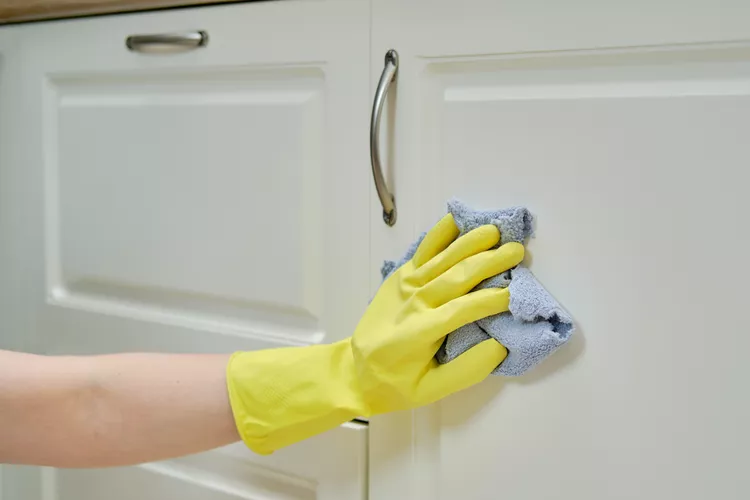
Greasy Cabinet Surfaces: Clean Buildup Without Damaging Finish

Greasy cabinet surfaces develop gradually as cooking oils, steam, dust, and fingerprints collect around handles and near the stove. The buildup can feel sticky and attract even more dirt. Cleaning it aggressively, however, can dull paint, soften certain coatings, or damage wood finishes. The safer approach is to begin with mild cleaning and increase strength only when the surface tolerates it.
Identify the Cabinet Finish Before Scrubbing
Painted wood, laminate, thermofoil, stained timber, and factory-coated cabinets don’t always respond to cleaners in the same way. If you know the manufacturer’s care instructions, follow them first.
When the finish is uncertain, test your cleaning method in a hidden area. General kitchen care topics may be helpful for understanding how routine maintenance prevents heavy buildup from forming.
Look for Existing Finish Damage
Check for peeling edges, worn paint, cracks, swelling, or areas where the coating has already lifted. Liquid can penetrate damaged sections more easily, so use as little moisture as possible there.
Start With Warm Water and Mild Dish Soap
For ordinary grease, add a small amount of mild dishwashing liquid to warm water. Dampen a soft microfiber cloth, wring it out well, and wipe a small area using light pressure.
Follow with another lightly dampened cloth to remove soap residue, then dry the surface. Keeping cleaning supplies simple is often consistent with broader home maintenance ideas because unnecessary chemical strength can create more problems than it solves.
| Buildup Level | First Approach | Main Caution |
|---|---|---|
| Light fingerprints | Damp microfiber cloth | Avoid soaking |
| Mild grease | Diluted dish soap | Rinse residue |
| Sticky patches | Repeat gentle cleaning | Don’t scrape |
| Unknown finish | Hidden-area test | Watch for dulling |
Work on Stubborn Grease Gradually
Sticky grease around handles may require more than one pass. Let a lightly dampened soapy cloth sit against a small patch briefly rather than immediately reaching for an abrasive pad.
Wipe, check the result, and repeat if necessary. Decorative choices and cabinet materials vary widely, so cabinet and finish inspiration can also remind you why one cleaning method may not suit every surface.
Remove Hardware When Practical
If knobs or pulls can be removed easily, cleaning around them becomes much simpler. Keep screws organized and avoid overtightening hardware when reinstalling it.
Prevent Grease From Becoming a Thick Film
Light maintenance is easier on cabinet finishes than occasional aggressive cleaning. Wipe areas near the stove and frequently touched handles before grease combines with dust and hardens.
Use the range hood while cooking when appropriate, and clean its filters according to the manufacturer’s directions. A hood that is poorly maintained may be less effective at capturing airborne grease.
Cleaning Mistakes That Can Damage Cabinets
Abrasive pads, harsh scrubbing powders, concentrated solvents, and excessive water can harm some cabinet finishes. Even a household cleaner that works well elsewhere may discolor or soften a coating.
Another mistake is spraying cleaner directly onto doors and allowing liquid to run into seams. Applying cleaner to the cloth gives you better control. If a tested method causes color transfer, dullness, swelling, or softening, stop using it.
Frequently Asked Questions
Can dish soap remove kitchen cabinet grease?
Mild dish soap diluted in warm water can remove many common greasy films because it is designed to break down cooking oils. Always limit moisture and test first when the cabinet finish is unknown.
Should I use a scrub sponge on greasy cabinets?
Abrasive scrub surfaces can scratch paint, laminate, and clear coatings. A soft microfiber cloth is a safer starting point, with repeated gentle passes used instead of increased abrasion.
How often should kitchen cabinets be degreased?
Frequently touched and stove-adjacent areas benefit from light wiping whenever buildup becomes noticeable. Regular maintenance usually reduces the need for stronger cleaning sessions later.
Clean Conservatively and Check the Finish
Begin with the mildest method that can reasonably remove the grease. Work in small sections, keep moisture controlled, and dry each area after cleaning. Greasy cabinet surfaces rarely require aggressive scrubbing if buildup is addressed gradually. Protecting the finish matters as much as removing the grime, so stop immediately if your test area shows any unwanted change.