
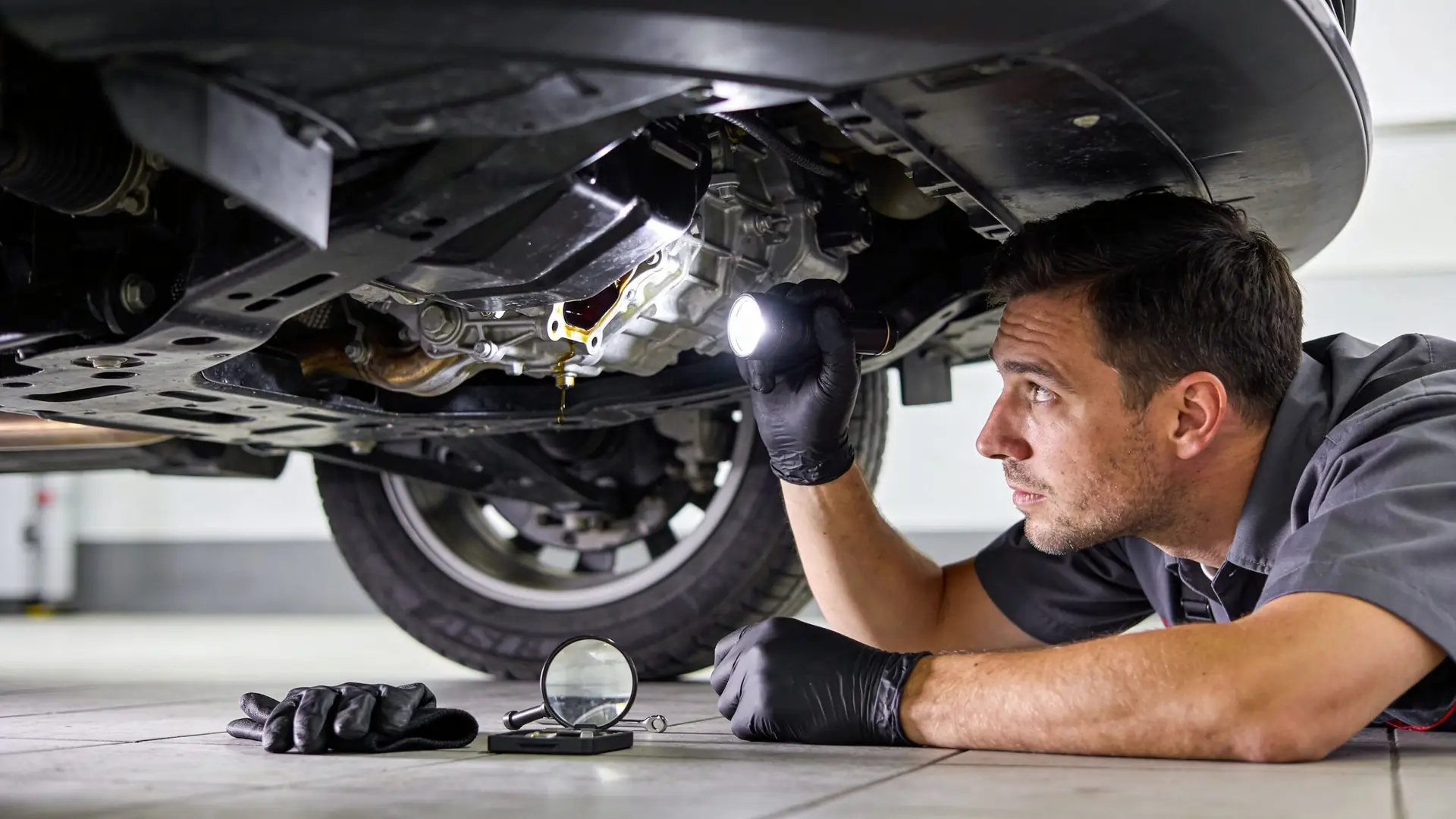
Transmission Fluid Leaks – Repair Seals Before Levels Drop

A small transmission fluid leak may look harmless when only a few drops appear beneath the vehicle. The problem is that fluid loss can eventually reduce lubrication and hydraulic pressure, leading to overheating, poor shifting, slipping, or delayed engagement. Transmission fluid leaks should therefore be located and repaired before the level falls far enough to affect normal operation.
Identify the Fluid Before Assuming the Source
Not every puddle under a vehicle comes from the transmission. Engine oil, coolant, water from air conditioning, power-steering fluid on some vehicles, and transmission fluid can appear in the same general area.
Color can provide a clue, but it isn’t a perfect test because fluid changes as it ages. Transmission fluid may range from reddish tones to darker brown depending on specification, age, and contamination.
Maintenance-focused fleet repair resources can encourage regular checks beneath parked vehicles, but identifying an automotive fluid by appearance alone isn’t enough when several systems are close together.
Clean Areas Make Leaks Easier to Trace
Oil and road grime can spread fluid far from the actual leak point. A technician may clean the affected area before reinspecting it so fresh fluid reveals where the leak begins.
In difficult cases, approved leak-detection methods may be used rather than replacing parts based on guesswork.
Common Areas Where Fluid Can Escape
Possible leak locations include the transmission pan and gasket, cooler lines, electrical connector seals, axle seals, output seals, or other housing seals. The exact possibilities depend on transmission design.
Road debris, corrosion, age, overheating, and previous service work may all contribute. Broader vehicle maintenance planning helps illustrate why routine inspections matter: a wet component caught early is easier to investigate than a transmission that has already been driven with insufficient fluid.
| Leak Clue | Possible Area | Why It Matters |
|---|---|---|
| Fluid near pan | Gasket or pan | Level may decline |
| Wet cooler line | Line or fitting | Leak may worsen |
| Fluid near axle | Axle seal area | Rotating parts spread fluid |
| Drops after parking | Active leak | Source needs tracing |
Low Fluid Can Change Transmission Behavior
As fluid escapes, an automatic transmission may struggle to maintain consistent pressure. Drivers might notice delayed engagement, slipping, unusual shift firmness, or increased transmission temperature.
Regular checks of vehicle and tire maintenance topics can support a broader inspection routine, but transmission fluid shouldn’t be added automatically whenever a puddle appears. Confirm both the fluid identity and correct level first.
Overfilling can be harmful too. The goal is the correct level with the leak repaired, not simply adding extra fluid.
Mistakes That Turn Small Leaks Into Larger Problems
Ignoring a small stain because the vehicle still shifts normally is risky. A slow leak may continue for weeks before symptoms appear, and the transmission could already be operating below its intended level.
Another mistake is tightening every visible bolt in an attempt to stop a pan leak. Excessive tightening can damage threads, distort components, or worsen gasket sealing. Proper repair depends on locating the actual source and following the correct service procedure.
Repair the Source Safely
Inspect the parking area regularly and monitor for changes in leak size. If you can access the transmission fluid level using the manufacturer’s specified procedure, verify it without working unsafely around a running or raised vehicle.
Stop unnecessary driving if a leak becomes heavy or is accompanied by slipping, overheating, severe shifting changes, or loss of gear engagement. Fluid contacting hot exhaust components also deserves prompt attention. Professional inspection can identify whether the repair involves a simple external seal or a more involved transmission component.
Frequently Asked Questions
How serious is a small transmission fluid leak?
Even a small leak deserves attention because transmission fluid isn’t normally consumed like fuel. Continued loss can eventually reduce the level enough to affect lubrication, hydraulic pressure, and transmission temperature.
Can I keep adding fluid instead of repairing the leak?
Repeated topping-off may temporarily maintain the level but doesn’t correct the source of the loss. It also increases the risk of incorrect filling, contamination, and sudden fluid loss if the leak becomes worse.
Does transmission fluid always look red?
No. The appearance depends on fluid type, age, heat exposure, and contamination. Some transmission fluids aren’t bright red even when new, so color alone shouldn’t be used to identify a leak.
Stop the Leak Before the Level Becomes the Bigger Problem
The best time to address a transmission leak is while the vehicle still operates normally. Confirm what fluid is escaping, trace the wet area to its source, and repair the failed seal, line, gasket, or fitting correctly. Waiting for slipping or delayed engagement means the leak has already started affecting transmission operation, turning a straightforward inspection issue into a potentially more expensive repair.