
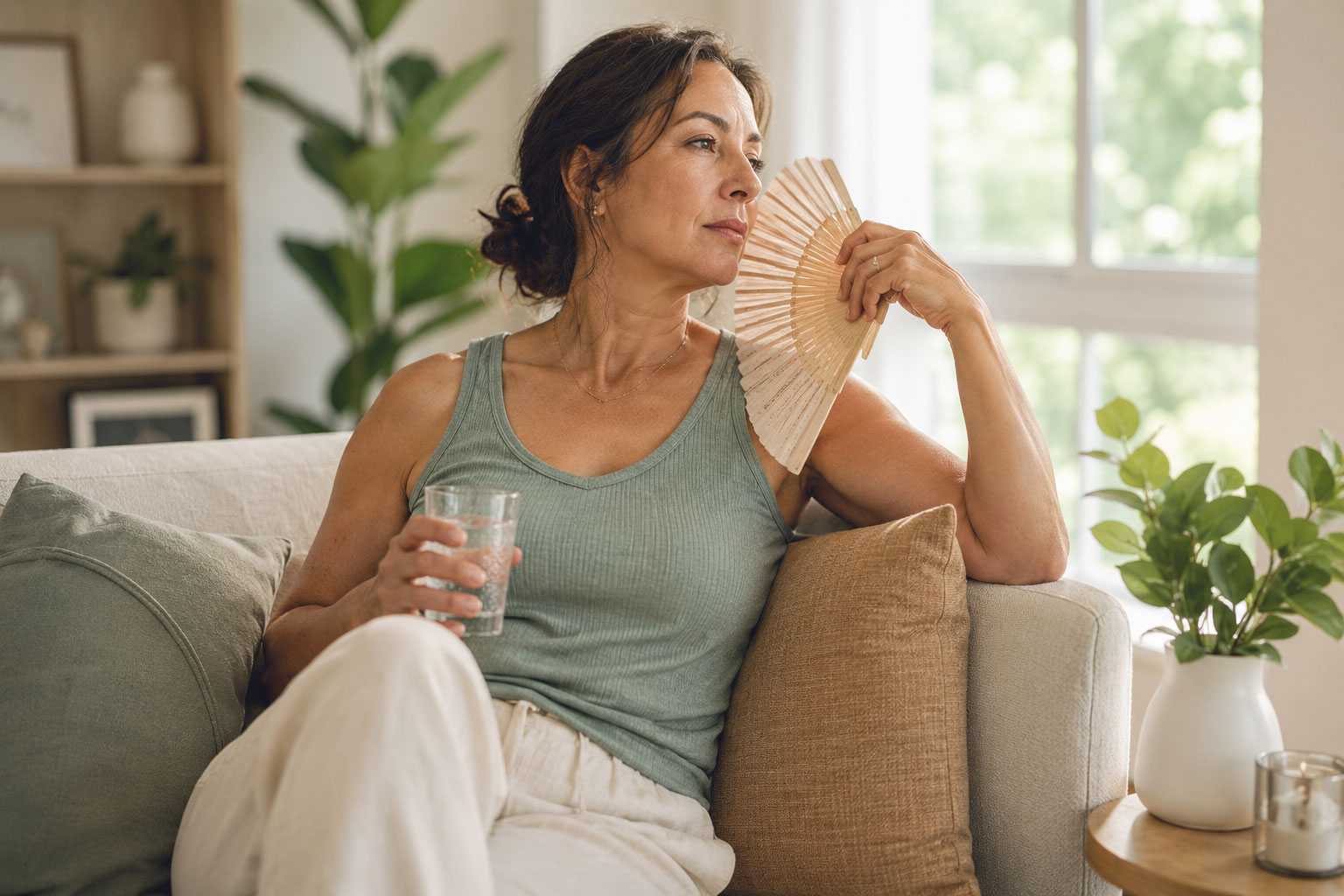
Menopause Hot Flashes – Reduce Triggers With Better Routines

Menopause hot flashes can arrive suddenly, bringing a wave of warmth, flushing, sweating, and sometimes a chill afterward. Some are brief and manageable, while repeated daytime episodes or night sweats can disrupt sleep and concentration. Better routines may reduce everyday discomfort even when they do not eliminate the underlying symptom.
What Is Happening During a Hot Flash?
Hot flashes are among the common symptoms associated with the menopausal transition. Hormonal changes during this period are believed to play an important role in vasomotor symptoms.
The National Institute on Aging describes hot flashes as sudden feelings of heat that often affect the face and upper body, sometimes followed by sweating or chills.
Night Sweats Can Create a Second Problem
A hot flash at night may interrupt sleep. Repeated waking can leave you tired, irritable, or less focused the next day even if the heat itself lasts only briefly.
That means improving the sleep environment can matter almost as much as responding to the hot flash itself.
Make the Environment Easier to Adjust
Light, removable clothing layers can be more practical than wearing one heavy layer. A cooler bedroom, breathable bedding, and a fan may also make nighttime symptoms easier to handle.
People exploring digital wellbeing content may see long lists of supposed triggers. It is more useful to observe your own pattern before eliminating foods, activities, or routines without a clear reason.
| Situation | Practical Adjustment | Goal |
|---|---|---|
| Warm room | Lower room temperature | Easier cooling |
| Heavy clothing | Use removable layers | Faster adjustment |
| Night sweating | Choose lighter bedding | Reduce disruption |
| Unclear triggers | Keep a symptom log | Find patterns |
Tracking Helps Separate Patterns From Guesswork
For a few weeks, note when hot flashes occur and what was happening beforehand. Include room temperature, sleep quality, stress, meals, beverages, exercise, and anything else that appears repeatedly connected.
Reading health-focused web content can generate ideas about possible triggers, but a personal record is more useful than assuming every commonly mentioned trigger applies to you.
Sleep Deserves Its Own Routine
Keep sleeping and waking times reasonably consistent, and make the bedroom comfortable for rapid temperature changes. If night sweats repeatedly disturb rest, discuss both symptoms together rather than treating poor sleep as a separate unexplained problem.
The National Institute on Aging offers guidance about menopause and hot flashes and notes that symptoms vary widely between individuals. Broader digital health reading should complement, not replace, professional advice when symptoms are disruptive.
What People Often Misread About Hot Flashes
One mistake is assuming every episode of sudden warmth must be menopause. Other health issues or medications can sometimes produce symptoms that feel similar, so new or unexplained episodes may need assessment.
Another is believing severe symptoms must simply be endured because menopause is natural. Menopause is a normal life stage, but troublesome symptoms can still be discussed with a clinician, including possible lifestyle and medical management options.
When Symptoms Need Medical Evaluation
Talk with a health professional when hot flashes or night sweats interfere substantially with sleep, work, mood, or everyday activities, or when you are unsure whether menopause explains them.
Prompt medical attention is appropriate for symptoms such as chest pain, fainting, severe shortness of breath, new neurological symptoms, or another sudden problem that does not fit your usual hot-flash pattern.
Frequently Asked Questions
Can menopause hot flashes happen at night?
Yes. Hot flashes occurring during sleep are often called night sweats and can cause repeated waking, making sleep quality an important part of symptom management.
Should I keep a hot-flash diary?
A brief diary may help reveal personal patterns involving timing, environment, sleep, stress, meals, or activities. It can also give a clinician clearer information if symptoms become troublesome.
Do all women experience hot flashes during menopause?
No. Menopausal experiences vary considerably. Some people have few symptoms, while others experience hot flashes, night sweats, sleep problems, or other changes that significantly affect daily life.
Build Routines Around Your Actual Pattern
Managing hot flashes starts with observing what happens rather than following every generic trigger list. Keep the environment adjustable, protect sleep, and record patterns that repeat. If symptoms remain disruptive, take that record to a health professional and discuss the available approaches instead of assuming discomfort is something you must simply tolerate.
This article is for general informational purposes and is not a substitute for professional medical advice, diagnosis, or treatment.