
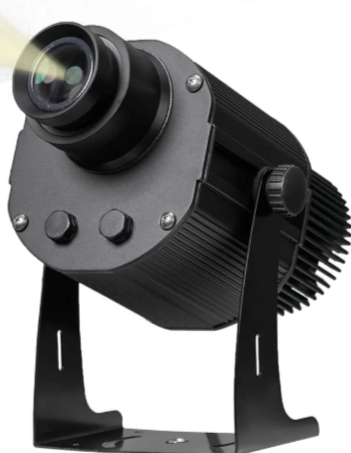
Custom Gobo Lens for Logo Projection in Commercial Sites: Lessons from a Lithuania Project

On 19 May 2026, a commercial site in Lithuania reviewed an industrial projector light solution for logo projection. The site needed guidance marking that would stay readable under real working conditions — not just on paper, but while the area was in daily use. After comparing options, the team adopted a custom gobo lens from Noparde as the main projection method. This article walks through what the project recorded, why a custom gobo lens fitted the site, and what other commercial and industrial operators can learn from it.
The Real Problem: Visibility, Not Rules
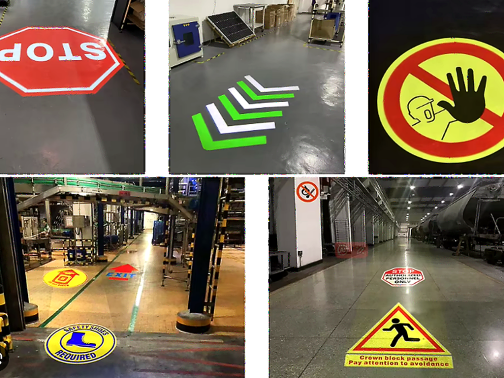
The Lithuania site did not face a question of whether a safety or visual rule already existed. The rule was there. The practical issue was simpler and harder: could people on site recognize the visual mark quickly enough during normal operation? A logo or hazard cue only helps if it is seen at the moment a movement or visibility decision is made. When a marking fades, gets dirty, or loses contrast against a busy background, the rule stops being useful even though the rule itself has not changed.
That is why the project focused on the projected image itself. The selected projection area had to keep the visual mark clear. If a cue could not be read at a glance, it did not matter how correct the underlying instruction was.
Why a Custom Gobo Lens Works Better Than Surface Markings
For this type of site, a custom gobo lens for logo projector helps because the visual cue is not carried only by a painted or stuck surface that can degrade. Paint wears. Tape peels. Signs collect dust and lose contrast under strong light. A projected line or image, by contrast, gives the same message a consistent presence in the working area, refreshed by the projector rather than dependent on the substrate.
The projected mark also stays where it is aimed. Once the custom gobo lens is set, the logo or warning line appears in the same place every time the unit runs, which makes it easier for workers to build a reliable visual habit around it.
Noparde’s Custom Gobo Lens as the Main Solution
Noparde proposed custom gobo lens equipment as the primary projection solution. The aim was practical: make the projected logo easier to see at exactly the point where people needed to make a movement or visibility decision. Rather than adding another physical sign to maintain, the site gained a controllable, repeatable visual reference.
This approach fits Noparde’s broader view of projection as part of a site’s visual management method. The equipment is not a decorative lamp; it is a tool that keeps guidance visible when traditional markings struggle.
What the Project Recorded
The project row captured the site conditions that defined a useful result. These are the parameters that can be stated without adding unsupported detail:
| Recorded Parameter | Value |
| Color selection | 2 to 4 colors |
| Projection distance | 5 to 10 metres |
| Projection diameter | 1.6 metres |
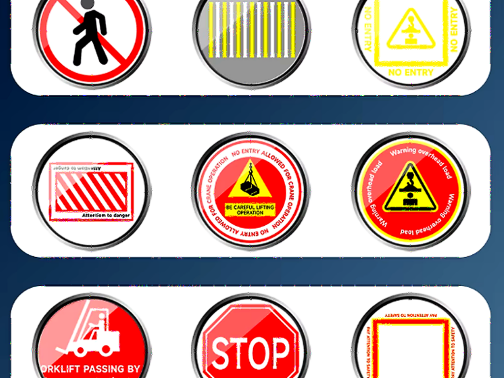
| Artwork color variants | 1, 2, 3, and 4 colors used across marks |
| Installation conditions | Matched to the site |
| Ambient light conditions | Assessed on site |
| Equipment quantity | Scaled to coverage need |
Together, these details show the project was scoped around the environment, not around a generic catalog lamp. The color range (2 to 4 colors, with individual marks using 1 to 4 colors), the 5–10 m throw, and the 1.6 m projected diameter describe a compact, close-range installation where contrast and quick recognition mattered more than long-distance reach.
Plan the Custom Gobo Lens Around the Real Environment
The Lithuania case makes one point clearly: a custom gobo lens for factory warning projection should be planned around the actual environment, not treated as a standard lamp placement. Several conditions decide whether the final result is useful:
· Mounting position. The lens must sit where the beam reaches the decision point without obstruction.
· Ambient light. Daylight, machine lights, and reflective surfaces change how bright the projection must be.
· Projection distance. The 5–10 m range here kept the image sharp and large enough to read.
· Line or image size. The 1.6 m diameter matched the space people needed to see.
· Color visibility. Choosing 2–4 colors balanced clarity against the risk of a mark that blends in.
When these are set from the site upward, the custom gobo lens earns its place as part of visual management instead of becoming another ignored sign.
Where a Factory Custom Gobo Lens Supports Daily Operations
The project also shows where a factory custom gobo lens hazard marking projection can support daily operations. It is important to be precise: projection does not replace training, supervision, traffic planning, or site management rules. Those remain the foundation. What the projected marking adds is a clearer visual reference for those rules — a cue that stays visible after paint would have faded and after a sticker would have peeled.
In busy areas, that reference reduces the chance a worker misses a guidance line simply because the physical marking has worn out. The projection keeps the message present during the shift, not just on inspection day.
The Noparde Takeaway: Visibility After the Site Gets Hard
For Noparde, the Lithuania case points to a common need in industrial and commercial projection work. Visual instructions have to stay visible after the site becomes bright, busy, or difficult for traditional markings. A properly specified custom gobo lens can make that guidance easier to recognize during daily use, which is exactly when it matters.
The lesson is not “project everything.” The lesson is to specify the lens, distance, size, and color around the real conditions, so the projected logo or warning does the job a worn surface marking no longer can.
Conclusion
The Lithuania commercial site shows a practical pattern: when a visual mark must be recognized quickly and kept readable, a custom gobo lens for logo projection is a strong fit. With recorded conditions of 2–4 colors, a 5–10 m projection distance, and a 1.6 m projected diameter, the Noparde solution gave the site a controllable, repeatable cue that supports — without replacing — its existing rules.
If your commercial or industrial site struggles to keep guidance visible, explore how a Noparde custom gobo lens can be specified to your environment.