
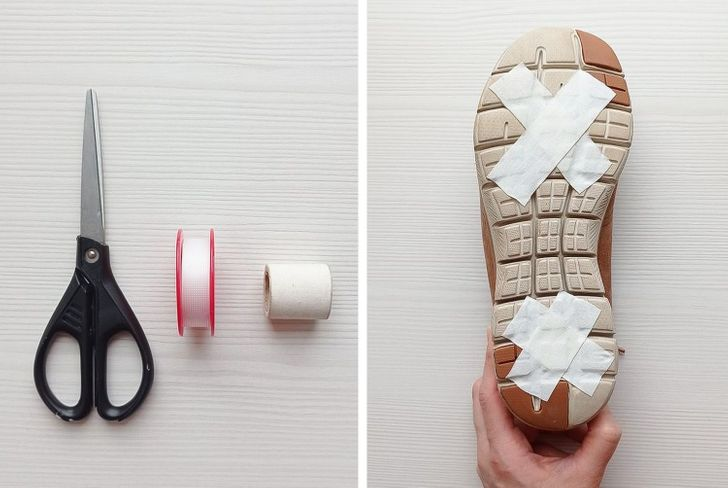
Slippery Sole Problems: Add Grip Before Wearing Outdoors

Slippery sole problems are worth addressing before you wear new shoes on smooth sidewalks, polished floors, or wet surfaces. Some new outsoles have a slick finish that offers less confidence until the surface gains texture.
Adding appropriate traction can help, but the right method depends on the sole material and the conditions where you’ll wear the shoes.
Check Why the Sole Feels Slippery
Start by examining the bottom of the shoe. A smooth leather sole behaves differently from textured rubber, and a shoe that slips on polished indoor flooring may perform normally on dry pavement.
Traction also changes with dust, water, oil, and surface angle. No modification makes footwear slip-proof in every environment.
Test New Shoes Indoors First
Take a few careful steps on a clean, dry surface before heading outside. Pay attention to whether the shoe feels unstable during normal forward steps as well as turns.
| Grip Issue | Possible Fix | Watch For |
|---|---|---|
| Smooth new outsole | Traction pad | Proper adhesion |
| Dirty sole | Clean outsole | Material-safe cleaner |
| Worn tread | Repair or replacement | Deep wear |
| Wet conditions | Better tread design | Surface limitations |
Consider Adhesive Traction Pads
Non-slip sole pads can add texture to smooth areas under the forefoot. They work best when attached to a clean, dry surface and positioned where the shoe contacts the ground.
Footwear often appears alongside broader current style conversations, but outsole performance should be treated as a practical issue rather than a fashion detail. Check that any traction pad is made for the type of shoe you’re modifying.
A poorly attached pad can peel at the edges and become another problem.
Clean the Sole Before Modifying It
Dust, manufacturing residue, or accumulated grime can reduce traction. Cleaning the outsole according to the material’s care requirements may improve grip without further alteration.
Your outfit choices can still draw from layered wardrobe inspiration while you choose footwear based on surface conditions. For example, the shoe that works for an indoor event may not be the safest option for a rainy walk between venues.
Let cleaned soles dry fully before testing them again.
Think About Professional Sole Protection
Dress shoes with smooth leather soles can sometimes benefit from professionally fitted rubber sole protectors. A shoe repair professional can advise whether adding a layer is suitable for the construction.
People drawn to classic style references may prefer leather-soled footwear for its traditional appearance. Adding discreet protection can sometimes preserve that look while giving the walking surface more texture.
The tradeoff is that any added material can slightly change the feel, flexibility, or appearance of the sole.
Mistakes That Can Make Grip Worse
Aggressively cutting deep grooves into a sole can damage it, while random household adhesives may not bond reliably to footwear materials. Avoid improvised changes that could detach while you’re walking.
Another mistake is assuming roughing up a sole makes it safe everywhere. Rain, ice, grease, polished tile, and steep surfaces create different traction demands. Choose footwear appropriate for the environment instead of relying on one modification.
Frequently Asked Questions
How can I make new shoe soles less slippery?
Start with a material-appropriate traction pad or professional sole protector if suitable. Clean the outsole first and test any modification carefully before relying on the shoes outdoors.
Does walking on pavement improve slippery soles?
Normal wear can increase surface texture on some smooth soles, but deliberately depending on outdoor wear for traction means accepting the initial slipping risk. Adding suitable grip beforehand is more controlled.
Can I put non-slip pads on dress shoes?
Many dress shoes can accept adhesive traction pads, although compatibility depends on the sole material and design. Follow the product directions or ask a shoe repair professional if the footwear is expensive or delicate.
Add Traction Before You Need It
Inspect new soles before taking them into demanding conditions. Clean them, add a suitable traction solution when needed, and test the result carefully. If the shoe remains unstable on the surfaces you regularly encounter, choosing footwear with a more appropriate tread is safer than repeatedly improvising fixes.